How to Elope in Paris
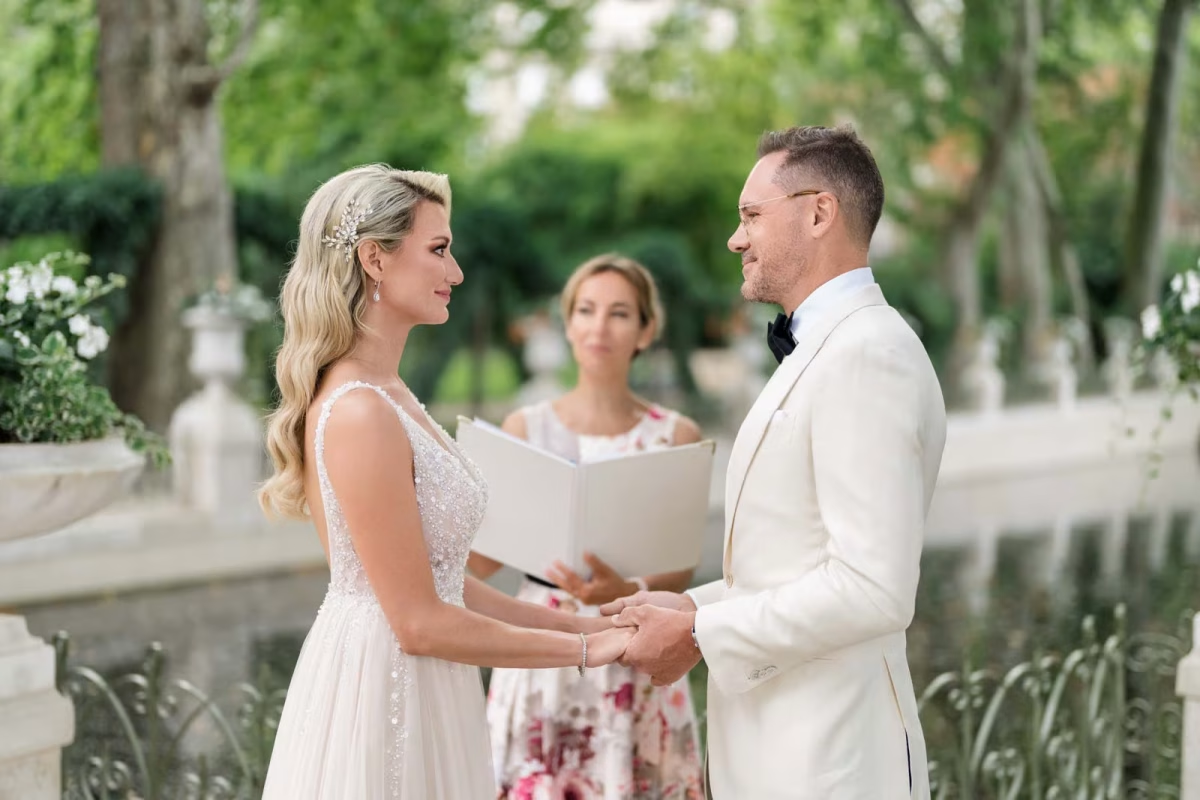
Most international couples who elope in Paris complete the legal marriage at home and hold a symbolic ceremony in Paris with an officiant, photographer, and flowers. A symbolic ceremony gives you full freedom on location, language, vows, and format — without the residency and paperwork requirements of the French civil process. This guide covers ceremony types, the strongest Paris locations, realistic cost ranges, seasonal timing, and the booking order that keeps planning from abroad straightforward. Events in Paris runs symbolic elopement packages from €2,500 with an English-speaking officiant, professional photographer, bouquet, music, and on-the-ground coordination.
Choose your ceremony type: symbolic vs legal
Symbolic ceremony
This is the route most international couples take. You handle the legal marriage at home — a courthouse visit, a registry appointment, whatever your country requires — and come to Paris for the ceremony itself. Vows, rings, an officiant, readings, music, photos: all of it, without the French civil paperwork.
Because the ceremony is symbolic, it is led by a celebrant rather than a French civil registrar. That gives you more control over language, structure, and location than the mairie process allows.
Legal civil marriage in France
A legal marriage in France runs through the local town hall (mairie). The process requires a connection to the commune — typically at least one month of continuous residence before the banns are published. The banns then post for 10 days. The civil ceremony is held at the town hall, not at a private venue or park.
For foreign nationals who do not live in France, a legal marriage is generally only possible through their own country’s consulate — not through a standard Paris mairie process. If you are set on a legally binding ceremony in France, consult your consulate directly and expect a longer planning timeline.
Religious ceremony
Do not build your plan around a church or cathedral ceremony unless you have direct written confirmation from the venue or clergy. Forum threads are full of couples who assumed a symbolic ceremony in a Parisian church was straightforward and learned otherwise. Active churches follow their own documentation and religious requirements. Treat this as a separate project with its own lead time.
Short version: If you live outside France and want a small ceremony without a long legal process, plan a symbolic ceremony in Paris and handle the legal paperwork at home.
| Symbolic in Paris | Legal at home | |
|---|---|---|
| Where | Any Paris location | Courthouse or registry in your country |
| When | Any day, any time | Before or after Paris |
| Led by | Celebrant or officiant | Civil registrar |
| Legally binding | No | Yes |
| Paperwork | None in France | Your country’s requirements |
Where to elope in Paris
Paris elopement locations split into three categories: public landmarks, quieter gardens and bridges, and private venues. Your priority — the view, the privacy, or the guest count — narrows the list fast.
Eiffel Tower ceremony spots
These are the most requested when the Tower in the background matters more than total privacy.
Trocadéro Fountains · Champ de Mars · Passerelle Debilly · Bir-Hakeim Bridge · Avenue de Camoens
All of these work best early in the morning. That is not a suggestion — it is a planning constraint. By mid-morning, Trocadéro has tour groups, selfie sticks, and street vendors in every frame. Sunrise or the first hour after gives you the cleanest backdrop and the most room to move.
For a full breakdown of Eiffel Tower ceremony and proposal spots, see the Eiffel Tower proposal guide.
Gardens and quieter public spaces
These suit couples who want greenery, water features, or a softer backdrop without the foot traffic of the main Eiffel Tower zones.
Luxembourg Gardens (Medici Fountain area) · Parc Monceau · Parc des Buttes-Chaumont · Parc de Bagatelle · Parc de Sceaux (cherry blossoms in spring) · select Seine riverbank locations
Timing still matters. Luxembourg Gardens opens at fixed hours that shift by season. Some sections of the Jardin des Tuileries get busy by late morning. Check park opening times for your specific date.
Central Paris architecture
For couples who want stone facades, bridges, and walkable photo stops rather than the Tower.
Louvre esplanade · Jardin des Tuileries · Pont Alexandre III · Île Saint-Louis · Pont Neuf · Palais Royal
These locations look great in photos. They can also feel busy. If you choose a bridge or public courtyard, plan the ceremony for early morning or late afternoon, and keep the group small enough to move quickly if a crowd forms.
Private venues
This is the route for couples who want full control over the space, the timing, and the guest count.
Private rooftops · hotel suites or terraces · private boats on the Seine · private dining rooms with a view
A private venue solves the two biggest problems public spots create: crowds and weather. If rain is a concern or your ceremony includes more than a handful of guests, a rooftop, suite, or boat removes most of the logistical risk.
For rooftop, boat, and other venue-backed elopement options with current pricing, see Paris elopement packages.
Quick location chooser
| If your priority is… | Start with… |
|---|---|
| Eiffel Tower in the background | Trocadéro, Bir-Hakeim, Passerelle Debilly |
| Fewer people in the frame | Garden location or sunrise at a public spot |
| Full privacy | Rooftop, private suite, or private boat |
| Walking between photo stops | Louvre / Seine bridges / central Paris |
| Small guest group (under 10) | Private venue or selected park |
When to elope in Paris: season and start time
Time of day changes the result more than most couples expect. Season sets the backdrop; start time determines whether you share it with tourists.
Best time of day
For public ceremony spots, early morning is the safest default. Sunrise or the first hour after gives you the best light, the fewest bystanders, and the most flexibility to move between locations for portraits.
Private venues open up more options. A rooftop at dusk with the Eiffel Tower lights is a different experience from a sunrise ceremony at Trocadéro — and both work, because the space is yours.
Best months
| Season | What to expect |
|---|---|
| March–May | Milder weather, spring growth in parks, rising demand for popular dates. |
| June–August | Long daylight hours, late sunsets, peak tourism at public landmarks. |
| September–October | Steady light, warm afternoons, easier dinner timing after the ceremony. |
| November–February | Shorter days, cooler temperatures, quieter mornings at most spots. |
No single season is the clear winner. The real question is your tolerance for cold, heat, and crowds — and how the ceremony fits with dinner, travel, and the rest of your trip.
How much does it cost to elope in Paris?
A small symbolic elopement in Paris typically costs between €2,500 and €5,000, depending on the location type, photography hours, and how much coordination you book.
| Elopement format | Typical range | What drives the cost |
|---|---|---|
| Symbolic ceremony at a public spot | €2,000–€3,000 | Officiant, photographer (60–90 min), bouquet, transport |
| Package with more support | €3,000–€4,000 | Longer photo coverage, hair and makeup, musician, coordination |
| Private rooftop or boat ceremony | €3,500–€5,000+ | Venue access, full ceremony setup, styling, longer coverage |
These are broad ranges based on what the Paris elopement market charges. Your total depends on the specific vendors you book and the add-ons you choose.
For exact current pricing: see Paris elopement packages.
Where couples get the budget wrong
Three mistakes come up repeatedly in forum threads and planner conversations:
- Underestimating photography hours. Couples book 60 minutes, then realize they also want getting-ready coverage, a second location, or portraits over dinner. Build at least 90 minutes into the plan.
- Assuming a public location means no logistics cost. There is no venue fee at Trocadéro. There is still a photographer, an officiant, transport, flowers, and someone to coordinate timing. Those costs are the same whether you are on a bridge or a rooftop.
- Treating hair and makeup, flowers, and transport as small extras. They add up. Budget for them from the start, not as afterthoughts the week before you fly.
What to book first
You do not need a long vendor directory. You need the right booking order.
- Ceremony date. Lock a date before anything else.
- Photographer. The good ones book out months ahead, particularly in spring and autumn.
- Officiant or celebrant. English-speaking officiants in Paris are a small pool.
- Location or venue. Private venues need advance booking. Public spots need a time-of-day plan.
- Hair and makeup. Mobile artists who come to your hotel book faster than you expect.
- Flowers. A bridal bouquet and boutonniere need at least a week of lead time; custom arrangements need more.
- Transport. A V-Class Mercedes or private car for the morning is worth booking early for popular months.
That order lines up with what matters most and what sells out fastest. Once the date, photographer, officiant, and location are confirmed, the rest falls into place.
For photographer recommendations, see our Paris proposal photographer guide. For hair and makeup, see the Paris HMUA guide. For live musicians, see the Paris musicians guide.
Should you book vendors separately or use an all-inclusive package?
Both routes work. The right choice depends on how much time you have, how comfortable you are coordinating vendors from abroad, and how important day-of logistics support is to you.
| Handled by the provider | Book separately (DIY) | Partial help | All-inclusive package |
|---|---|---|---|
| Planning time | High — you find and book each vendor | Medium — planner handles some | Low — one booking covers it |
| Cost clarity upfront | Low — vendors quote separately | Medium | High — one price, no surprises |
| Who coordinates on the day | You | Mix of you and planner | The team |
| Rain / backup plan | Your responsibility | Shared | Handled by provider |
| Vendor quality control | On you | Shared | Vetted by the provider |
DIY gives you more control over individual vendor choices and potentially a lower floor price if you keep the day simple. An all-inclusive package gives you a single point of contact, one price, and a team that handles setup, timing, coordination, and cleanup.
For current all-inclusive options: see Paris elopement packages.
A simple elopement day plan
A small elopement does not need a full wedding schedule. It needs a clear run of events with buffer time built in.
Sample morning ceremony
Hair and makeup at the hotel (allow 90 minutes). Bouquet delivery to the room. Travel to the ceremony location. Ceremony: 20–30 minutes. Portraits nearby: 30–45 minutes. Optional second photo stop. Brunch or early lunch. That is the full morning.
Sample sunrise ceremony
Very early wake-up. Travel while the city is still quiet. Ceremony at first light: 15–20 minutes. Portrait session as the city wakes up: 30–45 minutes. Return to the hotel. Hair and makeup later if you want a second look for dinner. Breakfast.
One clear timeline is all you need. If the day involves a private venue, the venue and your coordinator handle the rest of the scheduling.
For restaurant ideas after the ceremony, see our Paris restaurant guide.
What to wear for a Paris elopement
There is no dress code for a symbolic ceremony. Most couples wear wedding attire — but the range is wide, from a full gown to a cocktail dress to a sharp suit.
Practical notes
Season and comfort matter more than you might expect. A symbolic ceremony with vows, readings, and photos can run 20–30 minutes outdoors. In cooler months, plan layers you will want to keep on: a coat, wrap, or cape over the dress, warm base layers under a longer gown, and a suit in a slightly heavier fabric. In summer, lighter fabrics keep you comfortable — a heavy dark suit above 30 degrees gets hot fast.
Think about where you will be standing and walking. Cobblestone streets, garden paths, and the Seine riverside are not the same surface as a flat private rooftop. Choose shoes you can stand and move in for at least an hour. Bring a second pair — flats or sneakers — for walking between locations.
If you plan to wear a veil or hair accessory, coordinate with your hair and makeup artist so it is placed and secured properly before you leave the hotel.
Traveling with a dress
If you are flying in with a wedding dress, pack it in carry-on luggage — never checked bags. A local steamer can have it ready the morning of the ceremony.
If you prefer not to travel with a gown, wedding dress rental in Paris is an option with fittings on arrival and hotel delivery on the day. See dress rental.
Common mistakes when planning a Paris elopement
These come up in forums, in planner conversations, and in the questions couples send before booking.
Treating the legal marriage and the Paris ceremony as the same task. They are almost always two separate steps. If you are not eligible for a straightforward French civil process, handle the legal paperwork at home and keep Paris for the ceremony and photos.
Picking a location from photos alone. A spot that looks quiet in a blog post can feel chaotic by 10 AM. Visit timing matters more than the location name.
Booking too little photography time. This is the single most common regret in elopement forum threads. Couples start with a short session, then realize they want getting-ready shots, a second location, or coverage through dinner. Book more than you think you need.
Assuming a symbolic church ceremony is straightforward. Do not build the plan around this unless you have written confirmation from the venue. Active churches in Paris follow their own rules, documentation, and scheduling constraints.
Leaving small logistics to the last week. Cake, flowers, bouquet delivery, garment steaming, and transport sound minor until you are coordinating them across time zones from a hotel room the night before. Settle these early.
Planning the day backwards from Instagram saves. Collecting location screenshots is research. It is not a plan. Once you have a photographer, officiant, and location confirmed, the route and schedule come together. Before that, you are guessing.
Paris elopement FAQ
Can foreigners elope in Paris?
Yes, as a symbolic ceremony. A legal civil marriage in France requires the mairie process — residency, banns, and a civil ceremony at the town hall. That is why most international couples complete the legal step at home and hold the ceremony in Paris.
Is a symbolic ceremony in Paris legally binding?
No. A symbolic ceremony is not legally binding under French law. The legal status of your marriage depends on the civil process, not the Paris ceremony.
How far ahead should we book?
Three to six months gives you the best availability for photographers, officiants, and private venues. Peak months (April–June, September–October) book faster. Shorter timelines are possible but narrow the choices.
Can we bring guests to a Paris elopement?
Yes. Your location choice changes once you add people. A handful of guests at a public spot is manageable. More than that, or anyone who needs seating, points toward a private venue.
Can we hold a symbolic ceremony in a church?
Do not assume yes. Active churches follow their own rules and require specific documentation. Confirm directly with the venue before building the plan around it.
What is the best place to elope in Paris?
It depends on your priority. Eiffel Tower in the background: Trocadéro or Bir-Hakeim. Privacy: a rooftop, suite, or boat. Quiet greenery: Luxembourg Gardens or Parc Monceau. Central architecture: Pont Alexandre III or the Louvre esplanade.
How much does it cost to elope in Paris?
A symbolic elopement typically runs between €2,500 and €5,000, depending on the location, photography hours, and support booked. For exact current pricing, see Paris elopement packages.
What should we book first?
Date, photographer, officiant, and location — in that order. Those are the hardest to change later and the fastest to sell out.
Do we need a wedding planner for a Paris elopement?
Not for a small symbolic ceremony with a package provider who handles coordination. A planner becomes useful if you are adding a reception, a large guest group, or a multi-day itinerary.
What should we wear?
Whatever you want. There is no dress code for a symbolic ceremony. Most couples wear wedding attire, but some go with a cocktail dress or a sharp suit. If you do not want to travel with a wedding dress, dress rental in Paris is an option.
Can an American elope in Paris?
Yes. The standard route for Americans: courthouse marriage in the US before or after the trip, then a symbolic ceremony in Paris. No French legal process required. Most American couples handle the legal step at their local county clerk’s office and fly to Paris for the ceremony, photos, and celebration.
Next step: packages and pricing
This guide covers planning. When you are ready for exact pricing, location-backed options, and a confirmed date, the next step is the packages page.
See current elopement packages, pricing by location type, and add-on options: Paris elopement packages
More planning resources from Events in Paris:
Have a Date in Mind?
Events in Paris holds a five-star Google rating from clients who booked proposal and elopement packages.
→ Client reviews for proposal packages
We work with international couples planning from abroad and coordinate everything over WhatsApp in English, Spanish, French, and Mandarin.